
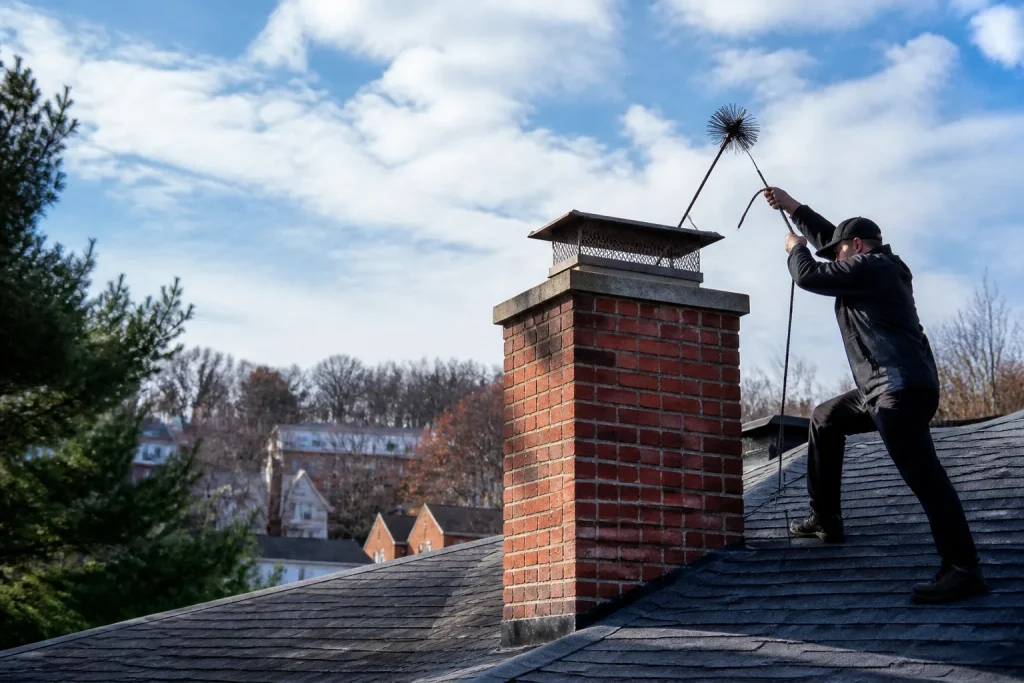
Emergency Chimney Sweep Near Me: What Oxford Circle Homeowners Should Do First
A chimney emergency is rarely the dramatic movie scene people picture. It’s usually a smell, a stain, a puff of smoke where smoke shouldn’t be, or a sound you can’t place. And the first twenty minutes after you notice something wrong matter more than the sweep itself, because the wrong move in that window can turn a manageable problem into a structural one. Here’s the sequence we’d want our own neighbors in Oxford Circle to follow, from the firebox to the crown.
If you’d rather skip the guesswork and get a trained eye on it, call us at (855) 259-0792 – estimates are free.
Start by naming the emergency: three types, three responses
Not every chimney problem calls for the same reaction. The single biggest mistake we see is homeowners treating all three like the same thing. Figure out which one you’re dealing with before you do anything else.
An active chimney fire. This is the one nobody wants. A chimney fire can burn at up to 2,000°F and be over in minutes. Signs include a loud roaring or popping sound, dense smoke, a sudden shower of creosote flakes out the top, or a hot flue that makes the surrounding wall feel warm. If you suspect an active fire that hasn’t spread to the house, get everyone out, call the fire department, and don’t try to fight it yourself. Once the fire department clears the home, that’s when a sweep comes in to assess the damage before anything is burned again.
Smoke backdraft. Smoke rolling back into the room instead of going up the flue. This points to a blockage, a damper problem, or negative pressure in the house. It’s uncomfortable and can set off smoke alarms, but it’s not a fire. Your response is to stop using the fireplace and get it inspected.
A structural crack or visible damage. Cracked flue tiles, crumbling mortar, a leaning stack, or staining on the ceiling or wall near the chimney. Structural problems don’t announce themselves with fire, but they can let water in, let combustion gases out, and eventually compromise the whole stack. This one deserves a fast professional assessment, not a wait-and-see.
Naming which of these you’ve got is the whole game. Everything else follows from it.
What to shut down and what NOT to touch before the technician arrives
Once you’ve identified the type of problem, here’s how to prepare safely while help is on the way. We’ve seen the same avoidable mistakes enough times that we can practically predict them, so read this part carefully.
- Stop using the fireplace or insert immediately. No more fires until it’s been checked. That means no “just one small one to test it.”
- Open a window. If you smell smoke or gas-like odors, get fresh air moving and move people and pets to a room away from the chimney.
- Keep the area clear. Pull back rugs, furniture, and anything combustible from around the hearth.
- Don’t close the damper during a flue fire. This is the single most dangerous mistake we see. Closing the damper chokes off the airflow and traps intense heat and pressure in the flue with nowhere to go, which can drive the fire into the structure. Leave it open.
- Don’t spray water down the flue. A chimney fire can crack tiles and warp a liner, and water on a hot flue can do damage of its own. Leave the extinguishing to the fire department.
- Don’t climb on the roof to “take a look.” It’s a fall risk, and you won’t learn what a trained eye would anyway.
The instinct to do something is strong, and we understand it. But in this case, the smartest thing you can do is stop using the fireplace, make sure the damper is open, and let a professional handle the rest. If you’ve got a problem that needs a trained technician, that’s a chimney repair call, not a tough-it-out situation.
Why Oxford Circle row homes spread risk differently than detached houses
Oxford Circle is built dense, and that fact changes the stakes. In a run of row homes, chimneys sit close together and often share walls, roof lines, and attic spaces. A fire that starts in one flue has a shorter path to a neighbor’s structure than it would in a detached home with yard on all sides. That’s why we take smoke smells and warm walls more seriously here than the same complaint might warrant on a big suburban lot.
There are other home-specific factors worth knowing about in Oxford Circle. Asphalt-shingle roofs and older masonry stacks are common, and the spaces that connect homes can let heat and smoke travel in ways that aren’t obvious from inside one unit. Winter weather here swings between cold snaps and sudden thaws, and that freeze-thaw cycle works on masonry crowns, mortar joints, and flashing every year. Water gets in, freezes, expands, and opens up cracks. Add creosote to the mix and you’ve got a flue that’s less forgiving than its age would suggest.
In other words, a “small” chimney problem in Oxford Circle has more neighbors than it would elsewhere. That’s not meant to alarm anyone; it’s simply the reason we look closely at the shared edges, not just the inside of your own flue.
What a legitimate emergency chimney company assesses on arrival
Here’s where we want to be blunt, because plenty of companies advertise “emergency” service and then do a routine brush-and-go regardless of what you called about. That’s a service call wearing an emergency badge, and it doesn’t serve you.
A genuine emergency assessment when a technician arrives should cover the whole system, from the firebox to the top of the stack. Expect the technician to:
- Look at the firebox and damper operation.
- Check the flue for creosote level, blockage, and cracks in the tiles.
- Inspect the cap and crown for damage, and check flashing and joints for water intrusion.
- Get eyes on the exterior of the stack, not just the inside.
- Tell you what’s an immediate concern versus what can safely wait until a scheduled appointment.
- Be clear about what they found and why it matters, with enough detail that you understand the recommendation.
What tells you a call is the other kind? A “technician” who’s on the roof before you’ve heard a word about what they’re looking for, who recommends thousands of dollars of liner or masonry work without showing you anything you can verify, or who won’t tell you which findings are urgent and which aren’t. A proper assessment uses a camera and gives you a report you can look at yourself, and it says plainly when work can safely wait. If the diagnosis doesn’t come with evidence, push back.
Document the damage before anyone cleans or repairs a thing
We’ve seen this cost homeowners real money: the chimney gets cleaned first, and the photos that would have shown the insurer what happened are gone. Before any cleaning or repair begins after a chimney event, document everything. Here’s a checklist that will make the insurance conversation far smoother:
- Photograph the room, hearth, and any staining or blistering on walls and ceiling near the chimney.
- Photograph the interior of the firebox and the visible flue opening.
- Photograph the exterior of the chimney from the ground, including the cap, crown, and any cracks or missing mortar.
- Note the date and time you first noticed anything wrong, and what you were burning.
- Keep your chimney inspection and any written findings in one folder with your policy documents.
- Save receipts for anything you had to replace or repair right away.
Once the documentation is done, a full inspection and sweep can go ahead, and the written report becomes part of the record. If a repair turns out to be necessary, that’s when we’d talk about materials; a failing flue is often where resurfacing or relining comes into the conversation, which is a different decision from a routine chimney sweep, and it deserves a report you can read line by line.
When to call a pro instead of waiting it out
You don’t need us for every creosote flake, but there are signals that mean stop and call now. If you’ve had a chimney fire, call even after the fire department has cleared the home. If you smell smoke in a room that shouldn’t smell like smoke, or see staining creeping across a ceiling or wall near the stack, call. If the fireplace won’t draw, if the damper won’t move, if you see cracked tiles or a crumbling cap, or if anyone in the home has been getting headaches or feeling unwell when the fireplace or gas insert is running, call. When in doubt, a camera inspection settles it and gives you something to look at.
We also see the other end of the spectrum: a homeowner assuming every puff of smoke means a new liner. More often, a neglected flue just needs a proper sweep and a clear look at the cap and crown. That’s why we keep the diagnostic and the repair separate in the conversation. Our technicians have up to 9 years of experience working chimneys and fireplaces specifically, and our job is to tell you the truth about what your flue needs, not to sell you the biggest job in the book.
Related services in Oxford Circle: if the inspection turns up a damaged cap or crown, that’s a chimney cap & crown job. If the diagnosis is a full-system concern, start at Chimney Sweep Oxford Circle to see the full scope of what one company can handle.
The Bottom Line
If something goes wrong with your chimney in Oxford Circle, the sequence is simple: name the emergency, shut down the fireplace and leave the damper open, document everything for insurance, and get a trained technician on it before you burn again. The three mistakes that escalate damage fastest are fighting a fire instead of evacuating, slamming the damper shut, and letting the chimney get cleaned before you’ve photographed it for the insurer. Get those right and you’ll have protected your home and your claim before the technician even walks up the walk.
If you’re in Oxford Circle and need help, Chimney Sweep Oxford Circle offers free estimates. Call (855) 259-0792. We answer 24/7. Fast dispatch from 7am to 7pm, Sunday through Friday. From the firebox to the crown, one call covers the assessment, the repair, and the materials, with no second contractor needed.
Frequently Asked Questions
Every job is priced per job by a written estimate, so the only honest answer before we see the flue is that it depends on your setup and what we find. The estimate is free and the scope is agreed before any work is booked. Call (855) 259-0792 for an exact quote.
Often yes, depending on scheduling and the type of problem. A suspected fire or structural concern moves to the front of the line. We answer 24/7, and a call outside dispatch hours is booked into the next opening, Sunday through Friday, 7am to 7pm. Call (855) 259-0792 and we’ll find you a slot.
No. Keep the damper open. Closing it traps heat and pressure in the flue and can drive the fire into the structure. Evacuate, call the fire department, and leave the damper alone.
A liner is only necessary when the flue is cracked, deteriorated, or no longer safe for what you’re burning, and you should never take that on faith. Any recommendation should come with camera evidence you can look at yourself. If the flue shows damage, we may suggest HeatShield resurfacing or a DuraFlex flexible liner as the right fix, and we’ll explain why each fits the finding. If it can wait, we’ll tell you that too. Call (855) 259-0792 for a straight assessment.
Written by the team at Chimney Sweep Oxford Circle.
Need Chimney Cleaning Help?
Call Chimney Sweep Oxford Circle - the local pro we connect you with is licensed and insured, here with fast help in Oxford Circle.
(855) 259-0792