
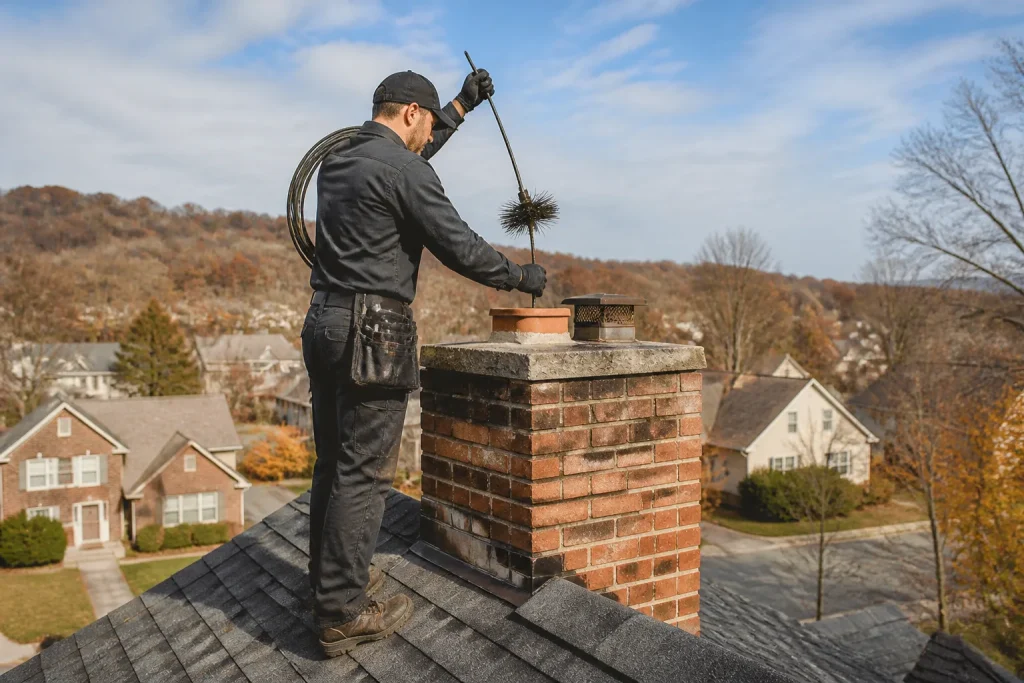
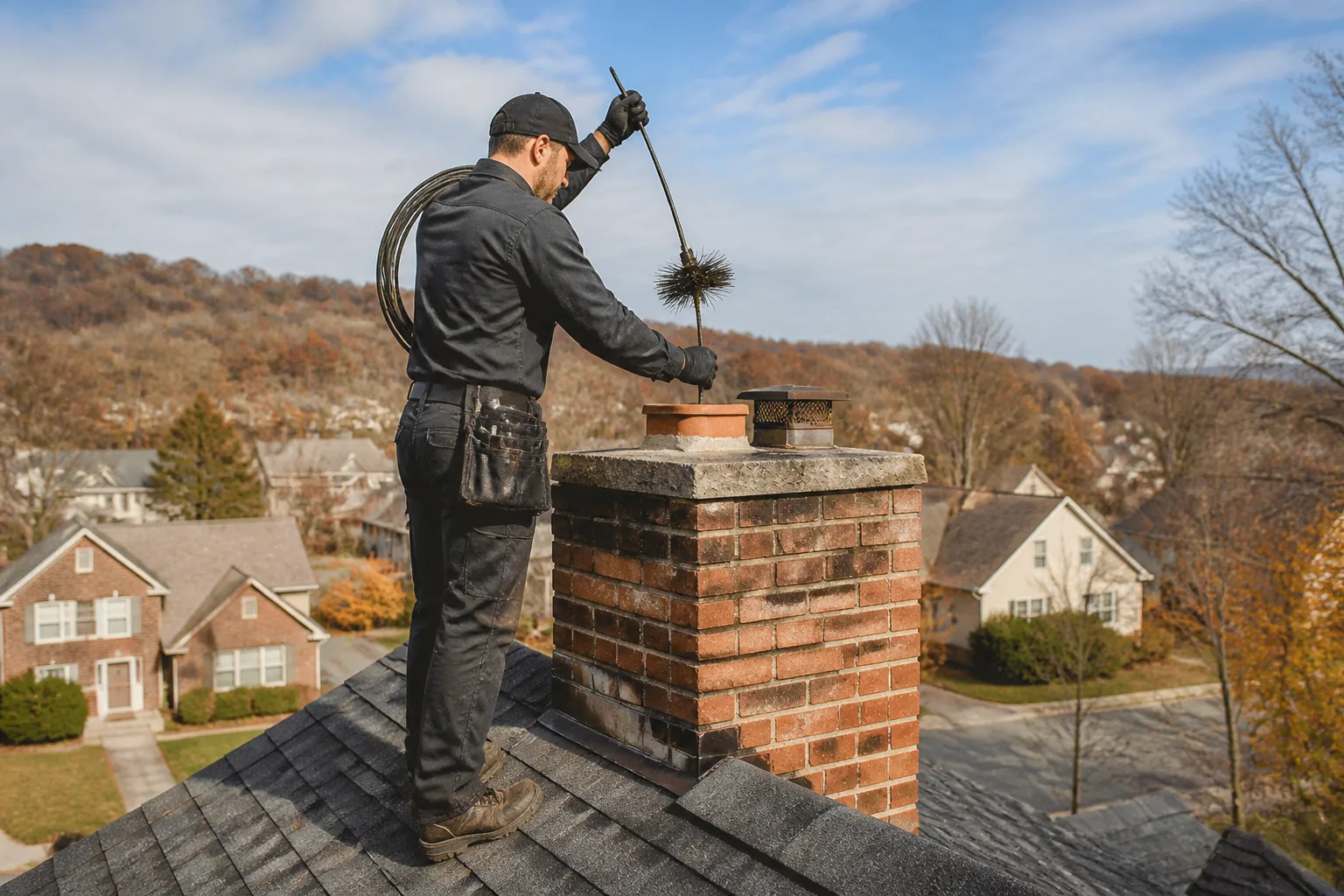
Top Signs You Need Chimney Cleaning Service – Don’t Ignore These
The signs that matter most usually show up months before the smell does. By the time a chimney starts backing smoke into the room or a sour creosote odor drifts off the fireplace, the buildup behind it has often been growing across several heating seasons. A stiff damper, a fire that won’t draw the same way twice, or a duller-than-usual flutter of flame are all earlier and more reliable warnings. We’re going to walk through the mechanical and structural signals most homeowners miss, and how to read them before they turn into a repair bill. If you’d rather have a trained eye confirm what you’re seeing, call (855) 259-0792.
What are the earliest warning signs you need chimney cleaning in Oxford Circle?
The earliest signs are rarely the obvious ones. In our experience across Oxford Circle, the first hints come from the chimney behaving differently rather than looking different. A wood-burning or gas-insert fireplace is a working system with moving parts and airflow, and it tells you when something has shifted inside. Most of what follows gets reported to us as “it’s probably just the weather,” and most of the time it isn’t.
- A stiff, grinding, or resistant damper handle. It should move smoothly. Resistance can mean distortion from heat, or debris settling against the damper plate.
- Drafts that change from one fire to the next. Same wood, same conditions, different draw; that inconsistency is often a partial blockage.
- Flue tiles that look glassy or cracked when you shine a light up. Glazing is a creosote stage most people have never seen named.
- Chips of tile or mortar landing on the damper or smoke shelf. These don’t come from the wood.
- White chalky deposits on a furnace flue vent connector. More on why that matters further down.
None of these require a louvered flashlight and a ladder to check for. The damper test alone takes ten seconds and tells you a lot. It’s also the check most people skip because it feels too simple to mean anything.
The damper resistance test, explained
Open the damper and close it a few times before you light anything. It should track evenly with light pressure. A handle that grinds, sticks partway, or feels loose enough to rattle is telling you the damper plate or its frame has been stressed. Heat cycles distort metal, debris pushes against the plate, and a hinge that doesn’t pivot cleanly can leave the damper stuck open or shut when you least want it. That’s a mechanical signal, not an opinion. It’s one of the plainest reasons people in Oxford Circle end up booking a sweep before they’ve noticed anything else.
Why does draft inconsistency point to a partial blockage, not the weather?
When a fire burns well one night and smokes the next with the same fuel and similar outside conditions, the cause is almost always a partial blockage somewhere in the flue, not a moody chimney. A full obstruction would stop you cold. A partial one leaves a narrowing that works until the temperature or wind load shifts just enough to change the pressure balance. In our experience, this pattern is the single most common thing homeowners dismiss for a week or two before calling.
Blockages build in stages. Creosote, leaves, a nesting mass, or a failed cap letting debris in can all narrow the flue. As it narrows, the fire pulls less air, burns slower, and produces more of the very residue that’s choking it. A drafty evening is often just the moment the narrowing finally tips the balance.
- Smoke rolling out of the firebox when you first light up, then settling once the fire is hot.
- A fire that smolders instead of catching even with dry, seasoned wood.
- Flame that sits low and lazy rather than reaching up into the firebox.
- Down-drafting on calm days, not just windy ones.
If your fire only behaves well in certain conditions, ask whether the chimney can actually breathe. A camera inspection during a sweep answers that faster than any guess. Nothing gets recommended after a sweep unless you can see the photographic evidence for yourself, and that includes a blockage that’s showing up as nothing more than a stubborn fire. You can book a chimney sweep with us and have the whole flue looked at on the same visit.
What does third-stage creosote look and sound like during a fire?
Third-stage creosote is glazed, tar-like, and hard, and it can make a faint crackling or hissing sound while a fire is burning. First-stage creosote is a light, sooty dust you can wipe off with a brush. Second-stage is a crusty, flaky deposit you can still scrape. Third-stage has been cooked by repeated heat until it fuses into a dense, glassy coating that clings to the flue tiles. It’s the stage that matters most.
The distinction is worth knowing because stage three is a stop-use situation. That coating is highly combustible, and it doesn’t brush away; it has to be removed carefully or addressed as part of a repair. A crackling or hissing sound isn’t the wood settling, and it’s not a sign the fire is happy. It’s a sign there’s material in the flue igniting in small amounts. If you see glazed, tar-like surfaces on the flue lining or hear that sound while burning, stop using the fireplace until it’s been inspected.
- Stage 1: light soot, wipes away easily, normal between cleanings.
- Stage 2: flaky, crusty, scrapes off with effort.
- Stage 3: glazed, tar-like, dense, doesn’t brush off, audible during a fire.
Stage three is one of the cases where a trained inspection matters more than a homeowner’s assessment. A licensed professional can see the difference up close. It’s also the reason we use professional-grade products like DuraFlex when the flue itself needs relining after prolonged heavy buildup, rather than patching over a problem that will come back. “Built to last, not patched to pass” is the standard we work to.
What does spalling inside an Oxford Circle brick chimney look like?
Spalling shows up in the chimney’s own mortar joints before it reaches the roofline. Oxford Circle’s older brick chimneys tend to follow a pattern: the mortar joints between the flue tiles and the surrounding brick begin to crumble inward and drop grit onto the smoke shelf and damper. Interior spalling is the quiet version of a problem most homeowners only notice when exterior brick starts flaking. The inside tells you first.
You’ll know it’s happening when you find a buildup of sandy grit or mortar crumbs sitting inside the firebox or on the smoke shelf when you open the damper. That’s the inside flue shedding. Exposed brick and mortar joints are constantly cycling between hot and cold, and each cycle loosens a little more if there’s moisture getting in. A missing cap, a failed crown, or a cracked flue tile all invite that moisture in, and then the freeze-thaw cycles in Pennsylvania do the rest between heating seasons.
When we see that mortar joint pattern during a sweep, we inspect the flue lining to see whether water has found a path in. If it has, resurfacing is a code-compliant repair rather than a rebuild, and HeatShield is the system we reach for because it restores a deteriorating flue without tearing the chimney down. Whether your chimney needs that is exactly what the camera inspection establishes. If it doesn’t, we’ll tell you plainly, and tell you how long it can safely wait.
Why do oil and gas furnace flues need cleaning too?
Oil and gas flues need cleaning just as much as wood ones, sometimes more, and the residue that forms in them is different. Gas combustion produces water vapor and acidic condensate. When a gas flue isn’t venting efficiently, that moisture condenses on the interior metal or tile and leaves white sulfur deposits behind. Those chalky, crusty patches on the vent connector are the visible marker, and they mean the flue is running cool enough that acidic condensation is forming and eating into the venting itself.
Oil-fired flues leave their own soot and sulfur residue that a wood-only chimney sweep can’t address. A common mistake in Oxford Circle is assuming that because you don’t burn wood, there’s nothing to sweep. The chimney is still doing a job. The furnace still needs ventilation, and whatever coats the flue after hundreds of heating cycles is still buildup. We’ve seen that assumption in plenty of homes.
- White, chalky or crusty deposits on the flue pipe or vent connector.
- Soot flaking off around the draft hood.
- A metallic or oily smell when the furnace fires.
- Uneven heating or a boiler that cycles oddly when venting is restricted.
If you see whiteness or crust on a furnace flue, get it looked at before the next heating season starts. A licensed professional can confirm the condition and, if the venting itself has deteriorated, replace it with a DuraFlex flexible liner system built for the job. One call covers the sweep and the repair if it comes to that.
When to call a pro instead of checking yourself
Call a pro for anything that involves the flue interior, the flue lining, the roof, or any fuel-burning appliance. Chimney cleaning on a wood flue is not a safe homeowner job to take on after reading an article. The risks aren’t theoretical: a fire is one risk, and carbon monoxide is the other. Both come from a flue that isn’t venting correctly, and both are why we don’t walk readers through the brushing itself.
There’s a practical reason too, beyond safety. A trained technician sees what a mirror at the firebox can’t. Our technicians have up to 9 years of experience, and a camera inspection during a sweep means we catch a partial obstruction, a cracked tile, or the start of spalling while it’s still a straightforward repair. If nothing needs doing, we say so, and we tell you honestly when work can safely wait until the next booking window. The whole point of a sweep is to find out what’s actually there, not to sell you something you can’t verify.
Related services in Oxford Circle: a chimney repair visit covers cracked flue tiles and failed mortar; a chimney cap & crown job handles the moisture side that starts most spalling in the first place. If your chimney needs both, we take care of it without a second contractor.
What actually happens if you put off a cleaning?
Putting off a cleaning lets each layer of buildup lower the flue’s ability to vent, and the residue compounds itself fire after fire. The draft weakens, the fire burns slower, and more creosote accumulates, which weakens the draft further. It’s a loop that gets worse quietly. The gray area is real, though: not every chimney needs a sweep every year, and we won’t tell you it does if the flue is clean. A sweep based on actual condition, plus a camera inspection you can see, makes the answer to “do I really need this?” something you never have to guess at.
A missing cap or cracked crown matters here too. Cap and crown work isn’t decorative; it’s what keeps water and animals out of a flue and stops the interior spalling that leads to bigger repairs. We use Gelco and Famco caps and venting products because they’re engineered for weather performance, not because they’re convenient.
The Bottom Line
The real warning signs are mechanical and structural, not cosmetic. A grinding damper, a fire that draws differently night to night, a crackling hiss from a glazed flue, grit landing on the smoke shelf, and white deposits on a furnace vent are all the chimney asking for attention before the obvious symptoms arrive. On a wood flue, glazed third-stage creosote and a firebox backing up smoke are the two cases where you stop using the fireplace and get it inspected before you light anything else. On any fuel, carbon monoxide risk comes from a flue that can’t vent, and only an inspection confirms whether that’s happening.
If you’re in Oxford Circle and need help, Chimney Sweep Oxford Circle offers free estimates. Call (855) 259-0792. We answer 24/7. Fast dispatch from 7am to 7pm, Sunday through Friday. One visit covers the sweep, the camera inspection, and the repair if it’s needed, with no second contractor to schedule. From the firebox to the crown, we handle the whole system, and we use DuraFlex, HeatShield, Gelco, Olympia Chimney, Famco, and Copperfield because those are the materials the trade trusts, not the ones that happen to be on a shelf. You get a written estimate, and the price is set per job before we start.
Chimney Sweep Oxford Circle – reach the team for a free estimate.
Frequently Asked Questions
Most wood-burning chimneys need sweeping once a year or after a full cord of wood, whichever comes first. Homes that burn regularly through the winter often sit at the sooner end. Gas and oil furnace flues should be inspected each heating season. The exact answer comes from looking inside yours, not from a fixed rule. Call (855) 259-0792 for an exact assessment – estimates are free.
No, not safely. Flue interiors, linings, and any fuel-burning appliance should be handled by a trained professional. The injury risk and the carbon monoxide risk are both real once a flue stops venting correctly. A proper sweep also includes a camera inspection you can see, so you know exactly what’s in your chimney. Call (855) 259-0792 for an exact quote – estimates are free.
Cold-weather flare-ups usually mean a partial blockage or water intrusion that only shows up under certain pressure and temperature conditions. It’s not a reason to wait for spring. Book a sweep now and let the inspection confirm what’s happening while it’s active. Call (855) 259-0792. A call outside dispatch hours is booked into the next opening, Sunday through Friday, 7am to 7pm.
You don’t need a new liner unless the flue lining itself is damaged, and you should be shown the evidence before anyone recommends one. If a liner is genuinely failing, DuraFlex is the professional-tier product we install. If it isn’t, we say so and tell you when it can safely wait. Call (855) 259-0792. We answer 24/7. Fast dispatch from 7am to 7pm, Sunday through Friday.
Written by the team at Chimney Sweep Oxford Circle.
Need Chimney Cleaning Help?
Call Chimney Sweep Oxford Circle - the local pro we connect you with is licensed and insured, here with fast help in Oxford Circle.
(855) 259-0792